
For First Nations and Inuit Communities — Quebec
A road built from the ground beneath your feet.
LL-TECH turns the soil and gravel already on your land into a paved, freeze-thaw-resistant road — without asphalt plants, without bitumen, and without flying in materials your community can’t source locally. Because the work happens on the existing footprint with non-toxic, DSL-listed inputs, the authorization path through MELCCFP, DFO, and your own community review tends to be measurably shorter.
Three Reasons This Lands
Cheaper. Faster. No special equipment or skills.
Everything else on this page supports these three. They are the reason LL-TECH belongs in a community road program — and the reason it is worth a pilot on your land.
Use what you already own
Cheaper.
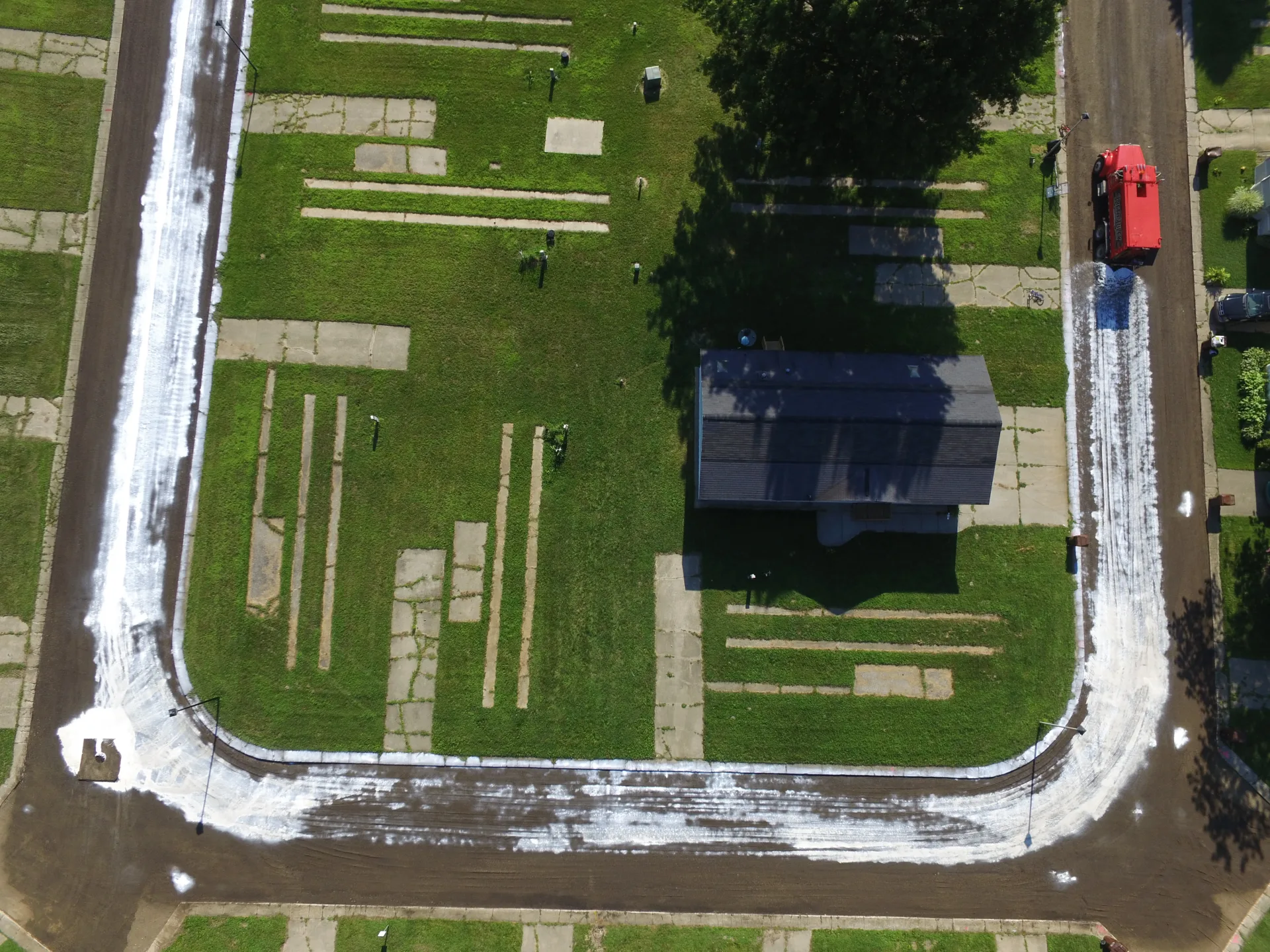
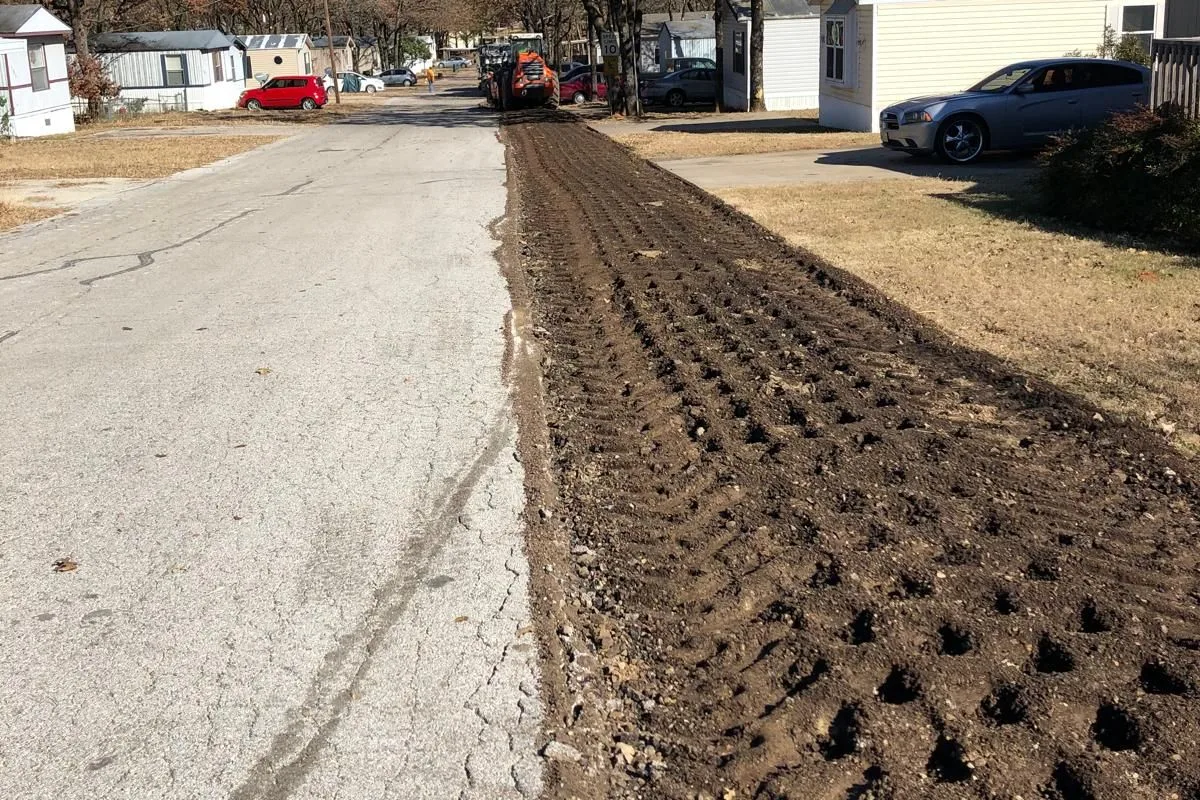
Native soil, gravel, your existing road base — these become the road. No imported aggregate, no asphalt plant, no fly-in fleet. The cost categories that dominate Northern and remote projects simply disappear.
Traffic reopening in 24–72 hours
Faster.
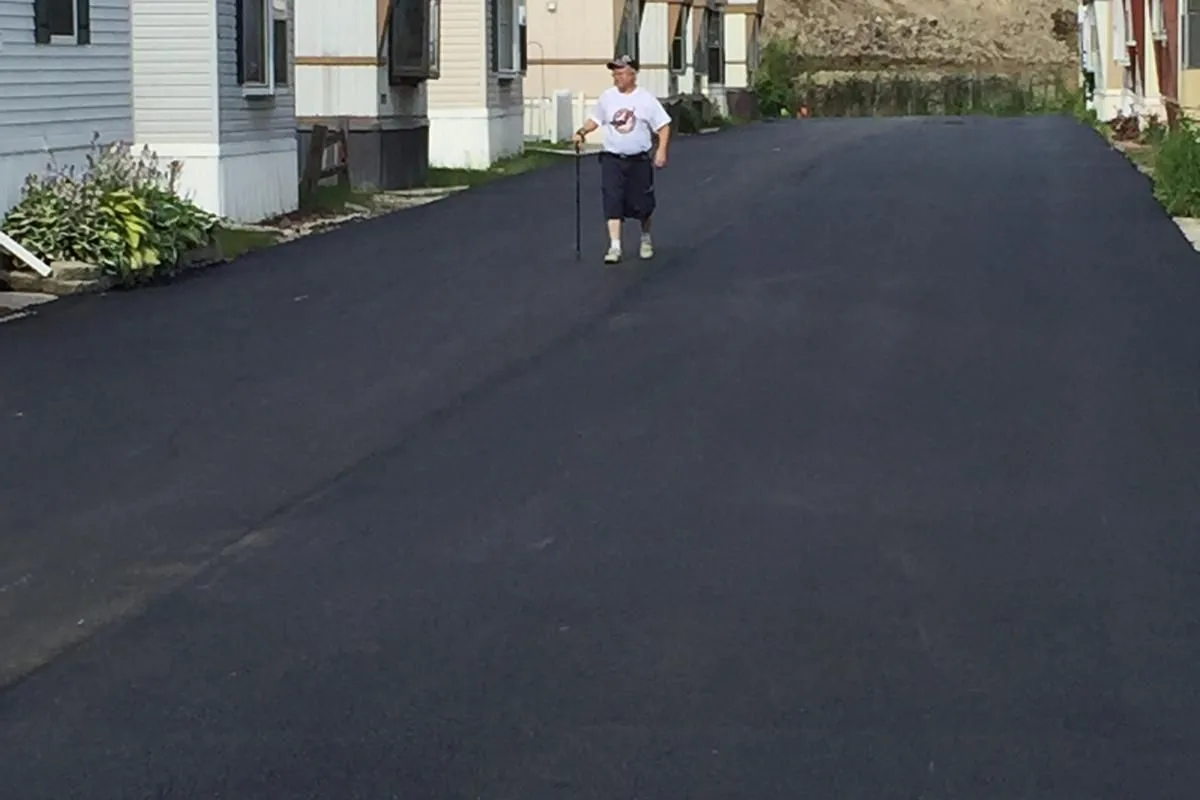
Light traffic in 24 hours, full traffic in 72. Less than two weeks per kilometre. One short Northern construction season is enough — no second window, no rebuild cycle.
Standard kit. On-site training.
No special equipment or skills.
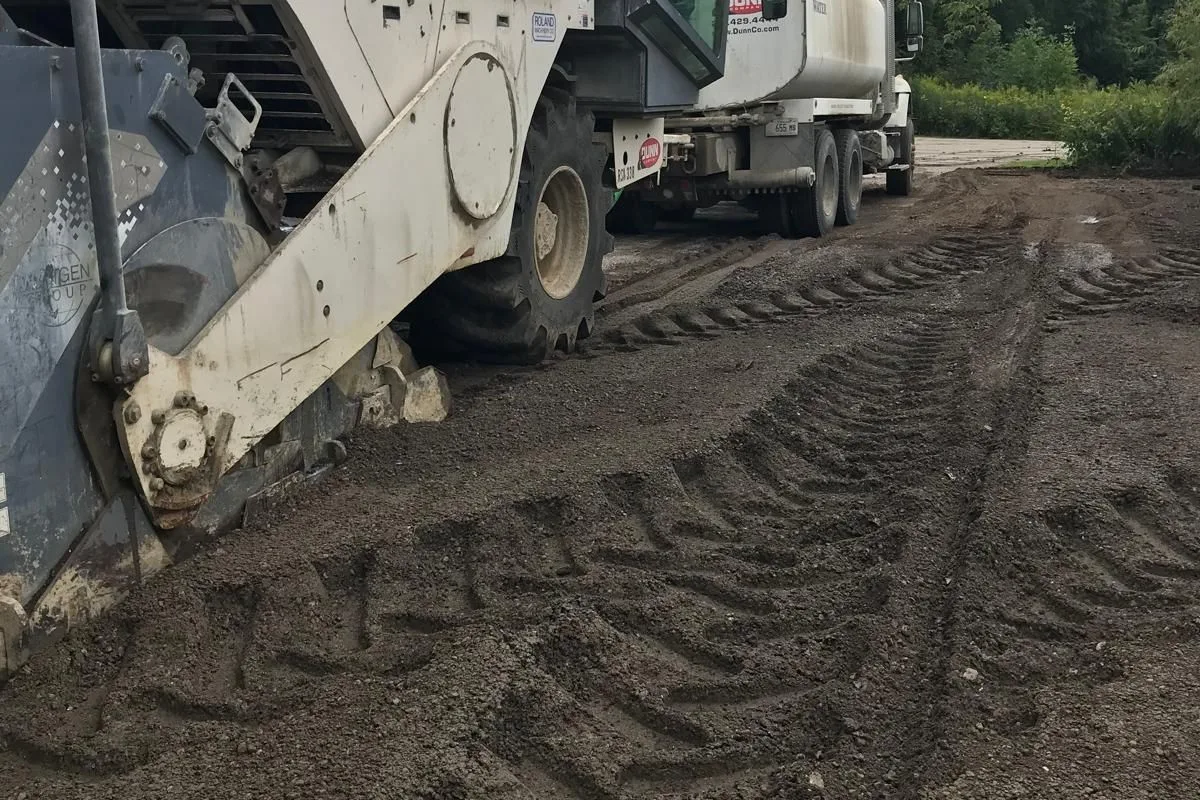
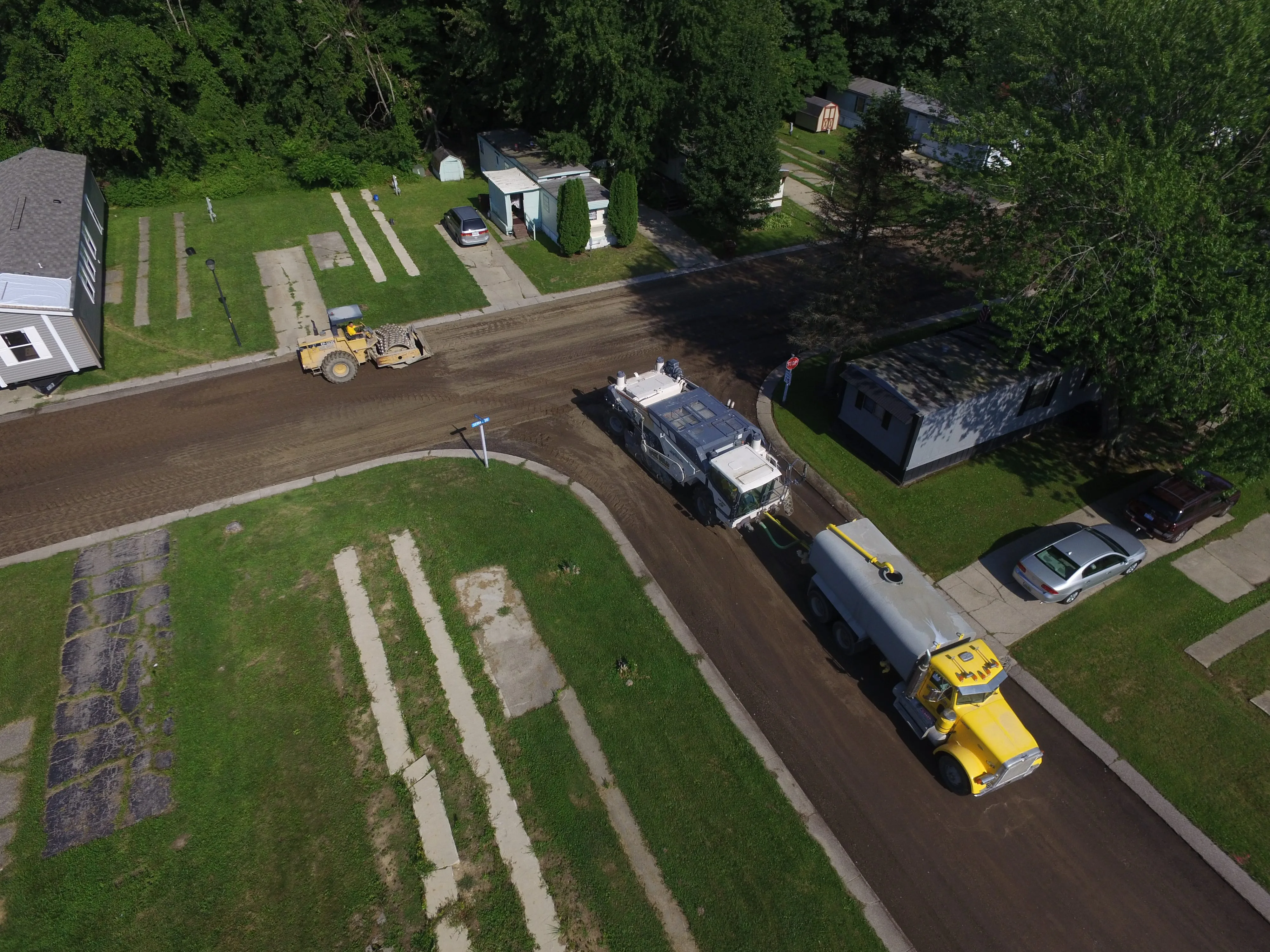
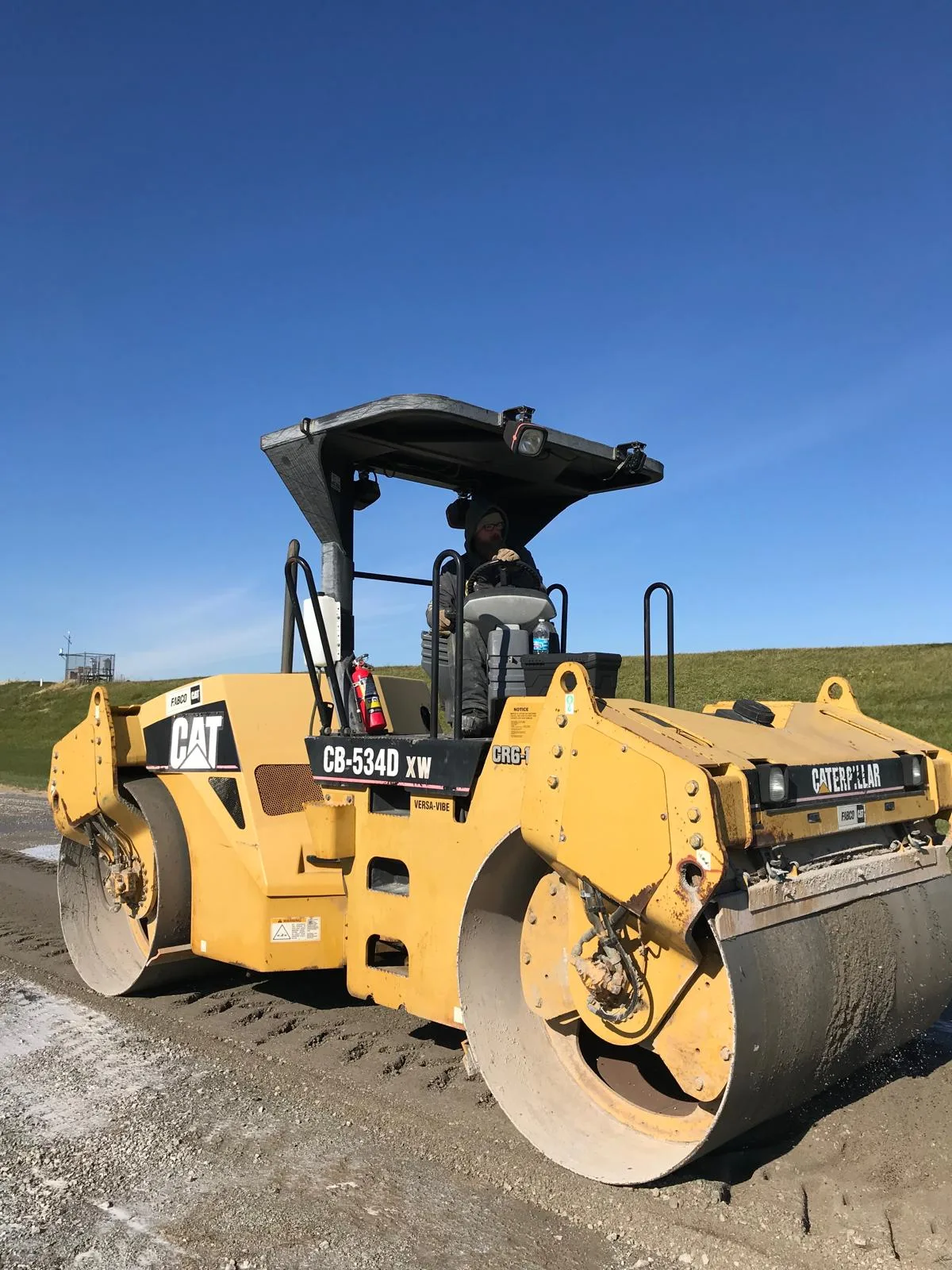
A reclaimer, a grader, a water truck, a roller — equipment your contractors already operate. 39 Marine engineers were trained on-site in four days; your public works team trains the same way, on your land, on your schedule.
The Rural Reality
Your roads carry more than vehicles.
In many communities across Nunavik, Eeyou Istchee, the Côte-Nord, and the Atikamekw and Innu territories, roads are the lifeline that connects services, food, fuel, healthcare, and family. They're also the infrastructure most punished by the climate: gravel washes out in spring melt, freeze-thaw cycles tear surfaces apart every winter, and short construction seasons leave little room for slow, materials-heavy projects.
Asphalt plants are hundreds of kilometres away — sometimes unreachable. Bringing in cement is expensive, slow, and often impossible by ice road. The result is a long cycle of regrading, rebuilding, and re-paying for roads that don't last.
LL-TECH was designed for exactly these conditions: remote, cold, soil-variable, and budget-aware.
The same conditions also stretch the regulatory calendar. In Northern Quebec, projects flow through the COMEV/COMEX procedure under the James Bay and Northern Quebec Agreement; in southern traditional territory, through MELCCFP's REAFIE regime. Both are friendlier to a project that doesn't import an asphalt plant, doesn't quarry, and doesn't generate hazardous waste.
What LL-TECH Enables
A polymer that turns local soil into a structural pavement.
LL-TECH is a non-toxic, non-flammable vinyl & acrylic co-polymer mixed with the existing soil, gravel, or recycled material on site. Once compacted and cured, it forms a hard, water-resistant, monolithic surface — strong enough to carry C-130 military aircraft, gentle enough that rainwater runoff is non-toxic to fish.
Use what's already there
Native soil, gravel, recycled crushed concrete, or your existing road base — LL-TECH binds with what you have. No imported aggregate, no quarrying, no long supply trucks.
Cold Process — No Emissions
Applied cold with standard equipment your contractors already operate: a reclaimer, a grader, a water truck, a roller. No heating, no plant, no specialized fleet to fly in.
Non-toxic, non-leaching
Independent rainwater runoff testing (Coastal Bioanalysts, EPA methods) confirms zero acute toxicity to aquatic species. No bitumen, no heavy metals, no contamination of your land or water.
Built for freeze-thaw
Hydraulic conductivity of k = 3.62 × 10⁻⁸ cm/s — classified as very low permeability. Water can't penetrate the structure, so it can't freeze inside it. The same property that protects against rutting protects against frost heave.
Reopens fast
Light traffic in 24 hours, full traffic in 72. A municipal road in Gachantipa, Colombia reopened in under 48 hours. Short construction windows are no longer the bottleneck.
Sustainable investment
At Twentynine Palms, 39 Marine engineers were trained to install the product in four days. Your community’s public works team can be trained the same way — on your land, on your schedule, with your equipment.
How a Project Runs
Four steps. Standard equipment. One construction window.
A complete LL-TECH installation moves through four well-defined stages, all using equipment commonly available to municipal and regional contractors:
- Site assessment — soil tested for CBR ≥ 40, gradation, and absence of organics. We confirm the site is a fit before any product moves.
- Reclaim & integrate — a reclaimer mixes LL30 polymer at 4% concentrate by weight into the existing road base, to a depth of 100–150 mm.
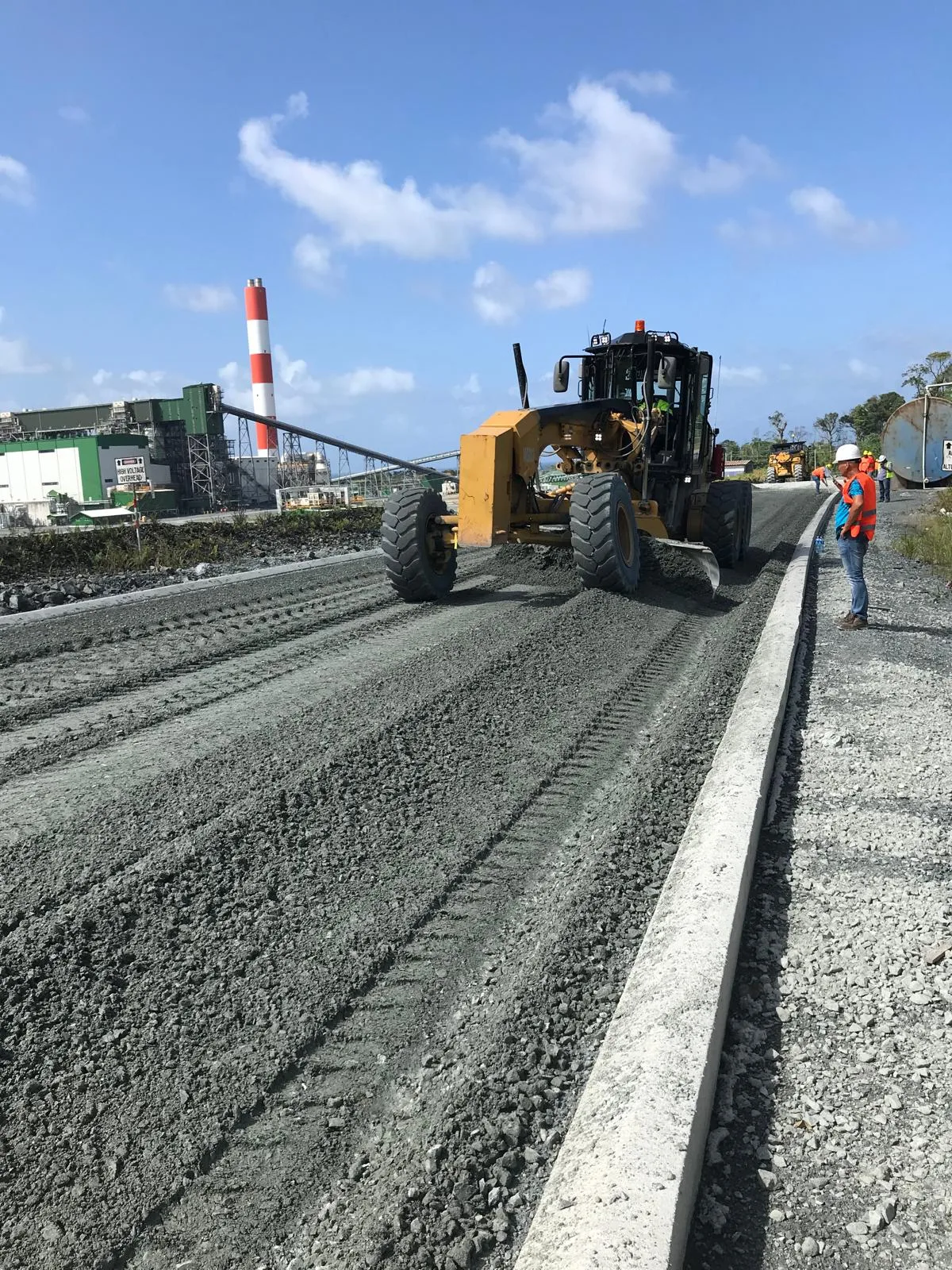
- Shape & compact — a grader pitches the surface for drainage; a double-drum vibratory roller compacts to 95%+ density.
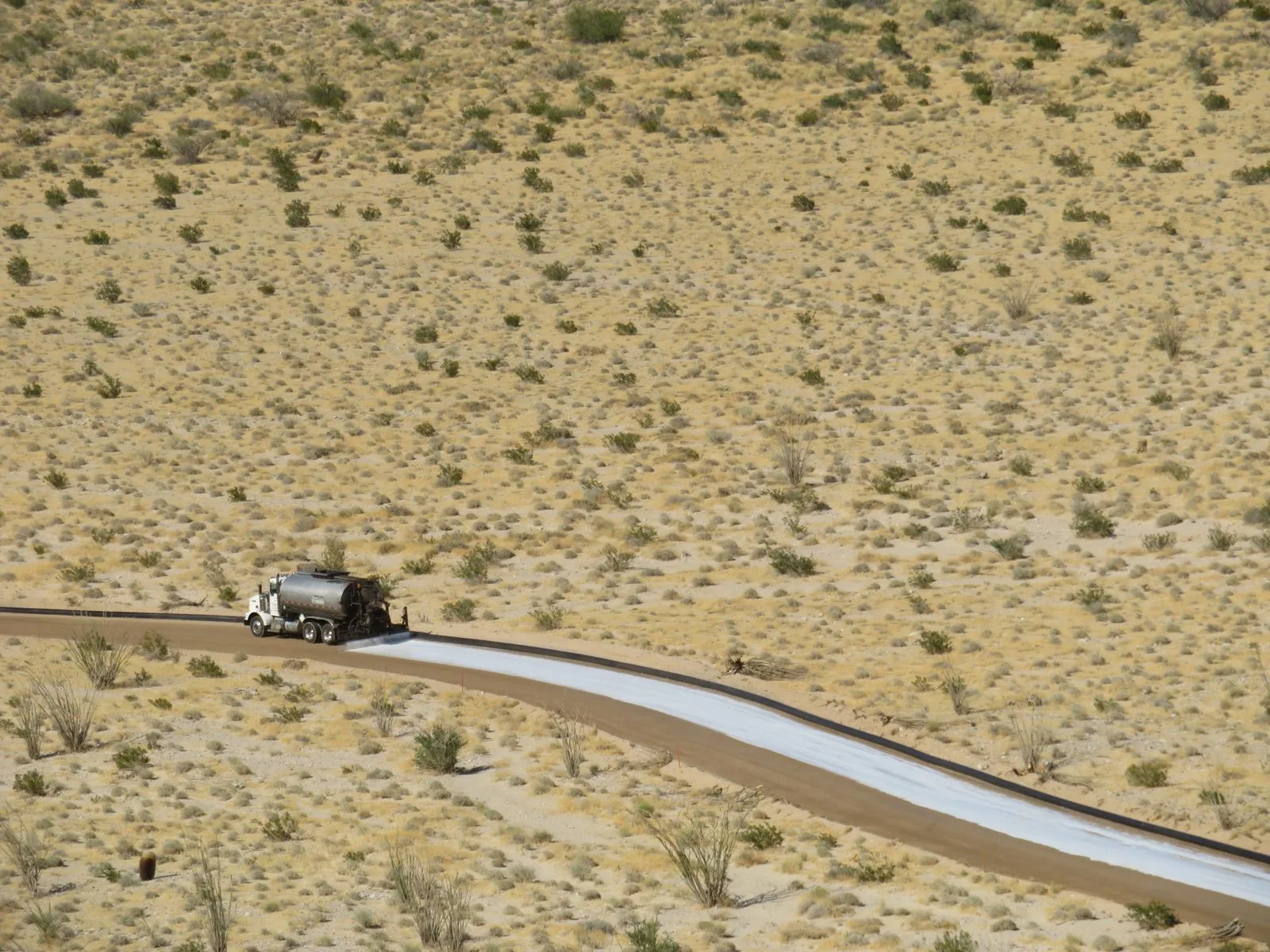
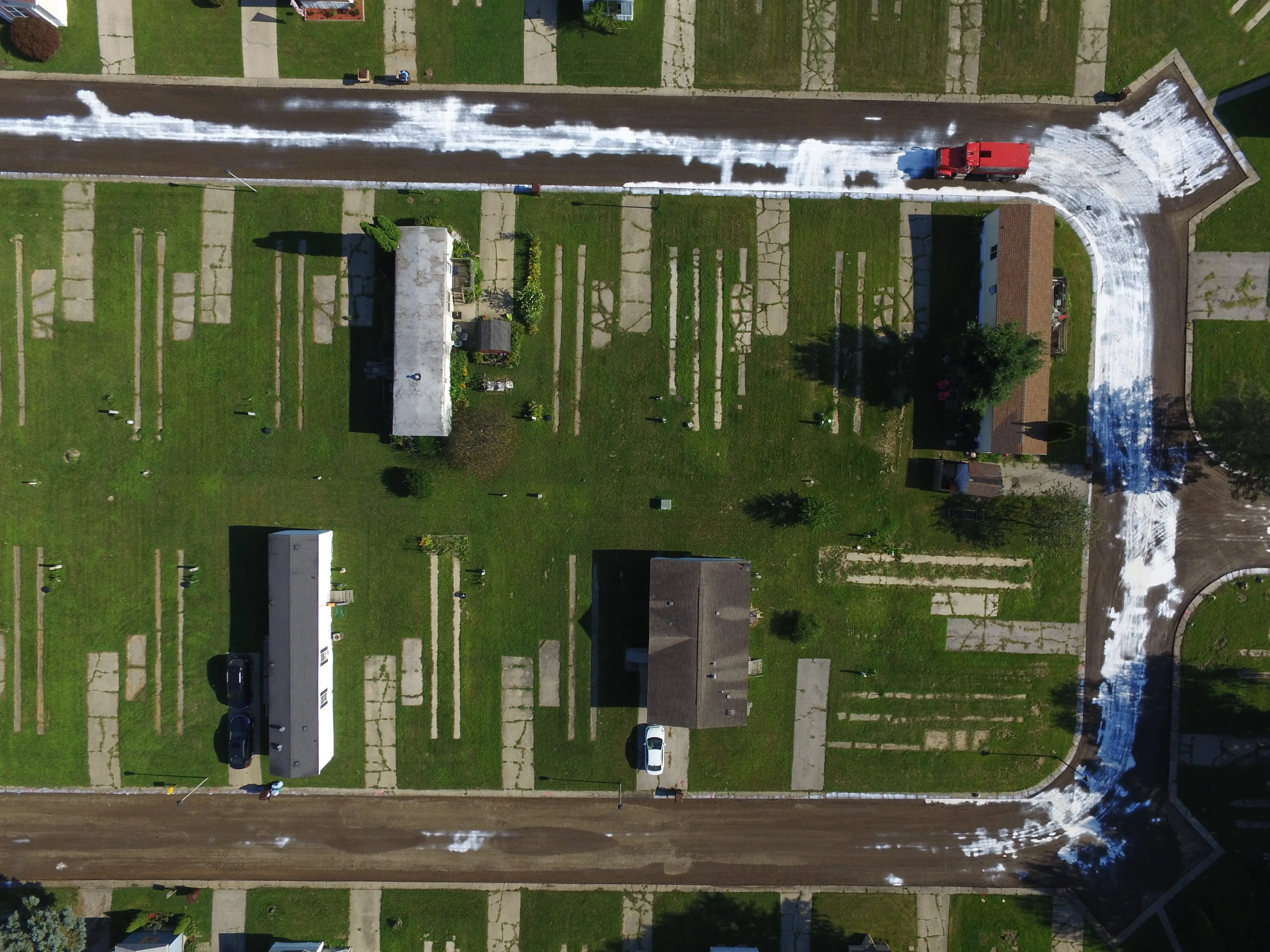
- Topical seal — LL25 surface seal is sprayed on top to lock the structure and form a dual moisture barrier. Light traffic at 24 h.
The window between site assessment and full traffic re-opening is typically less than two weeks per kilometre — well within a single Northern construction season.
Process Gallery
From existing road to finished surface.
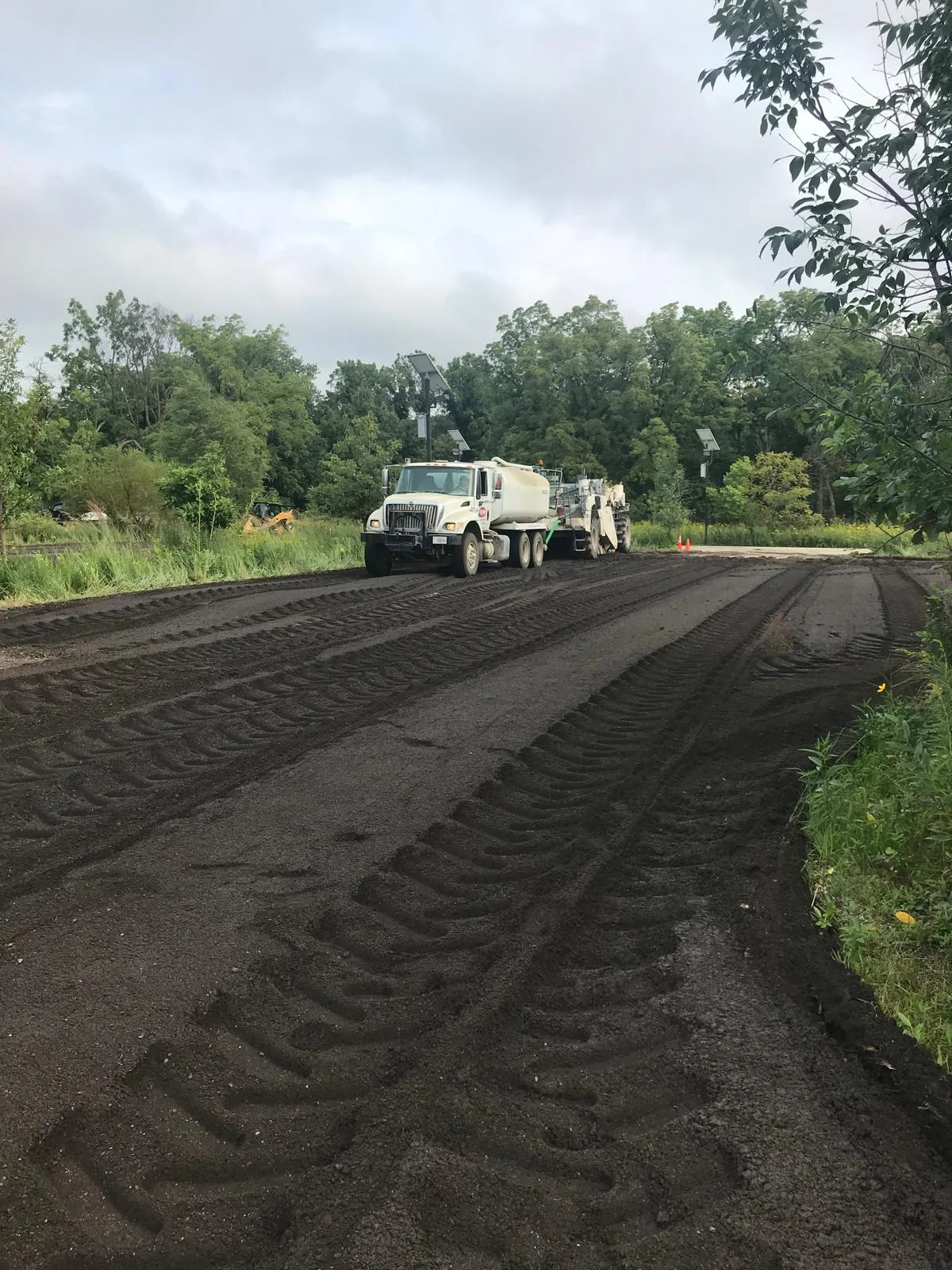
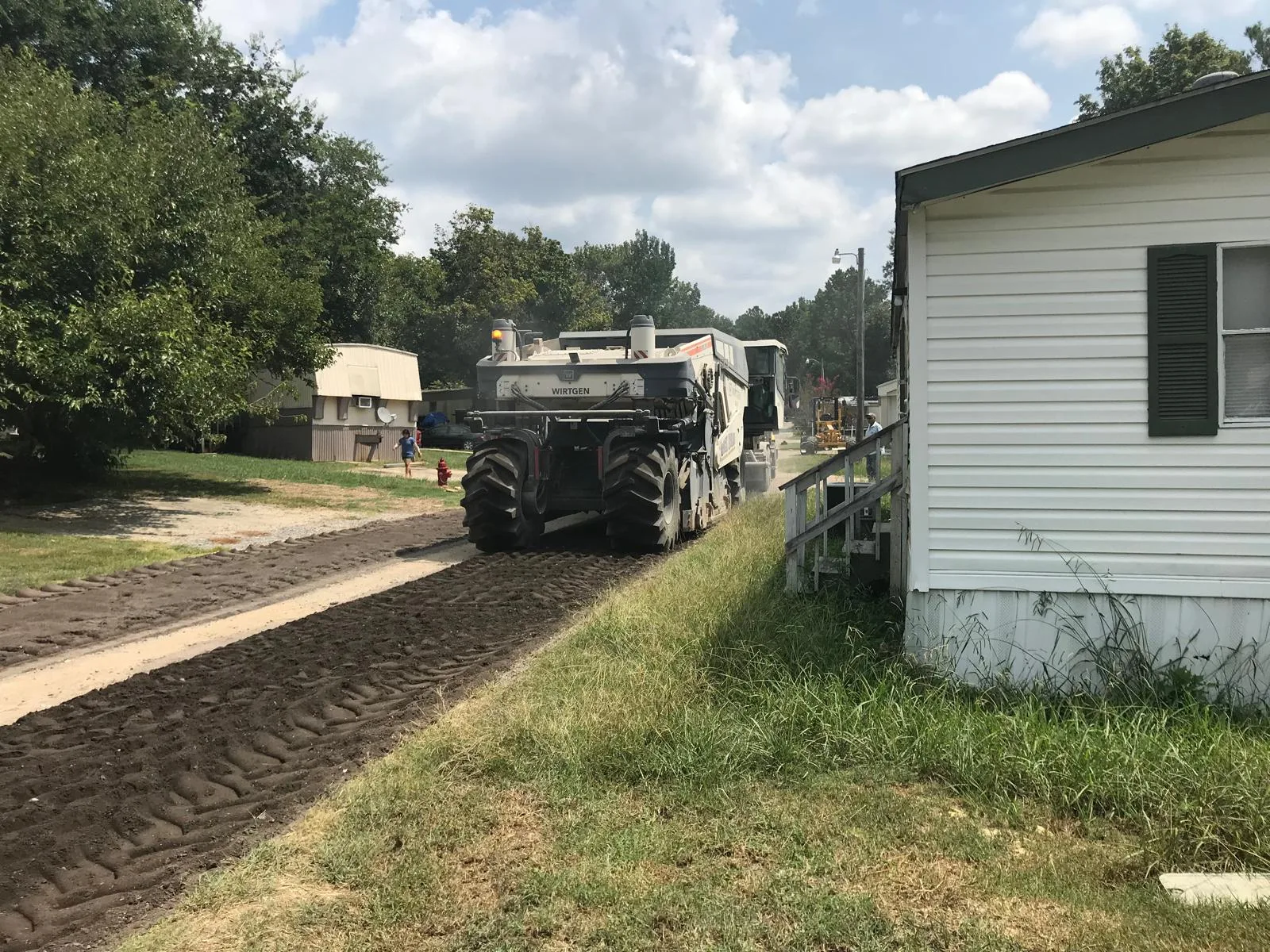
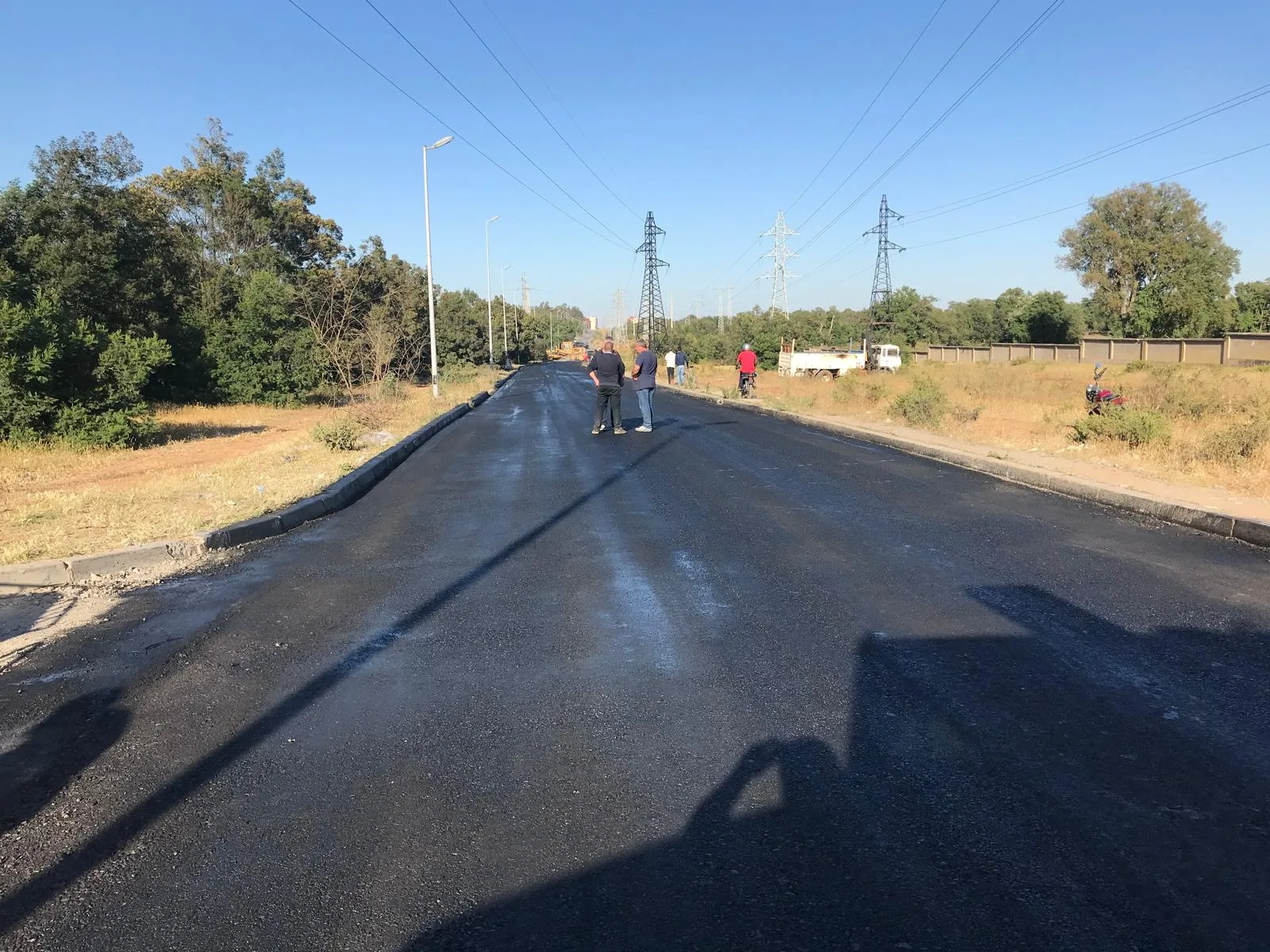
The total LL-TECH dose (typically 3–4% by weight of the base material) is delivered in two passes: about three-quarters is mixed into the road base by the reclaimer before shaping, and the remaining quarter is sprayed topically as a seal after compaction.
The Engineering, in Numbers
Tested under AASHTO and ASTM — the same standards Quebec engineers use.
A formal Engineering Letter on file (LANDLOCK Engineering, 2026) confirms test-data equivalency with Quebec / MTQ engineering practice — usable directly in CHAUSSÉE 2 with a structural layer coefficient a₂ ≥ 0.23. AASHTO T-324, ASTM C39 and ASTM D5084 are the same standards referenced in MTMD's CCDG and Normes — Ouvrages routiers Tome II.
Where It Has Been Proven
Built for the conditions you live with.
LL-TECH performance is documented across the world's most demanding remote and climate-stressed environments. Each of these projects shares conditions familiar to Northern Quebec: difficult logistics, local materials, no asphalt plant nearby.
Remote runway built on local soil. Certified for C-17 (450,000 lb) at 2,470 passes and C-130 at 23,847 passes. PCASE 2.09, U.S. Air Force.
Laterite rural road, government pilot project leading to official national approval in 2013.
380,000 sq. ft. of taxiway, apron, and refueling center built in four days. 39 Marine engineers trained on-site to install the product.
Municipal rural road completed rapidly, reopened to traffic in less than 48 hours.
14 miles (~250,000 sq. yd.) of access road treated with LL30 in undeveloped desert ecosystem. Passed federal environmental procurement requirements.
Independent third-party reconnaissance and treatment study by Grollemund LaboRoutes, confirming polymer behavior on cool-climate soils.
Land and Water
A road that respects what it crosses.
LL-TECH contains no bitumen, no petroleum-based binders, and no heavy metals. The cured surface forms a sealed, low-permeability layer — meaning rainwater runs off, not through. Independent toxicity testing under EPA Methods 2000.0 and 2002.0 (Coastal Bioanalysts) found that runoff from treated surfaces is non-toxic to tested aquatic species — LC50 greater than 100% for both Ceriodaphnia dubia and Pimephales promelas.
For communities whose territory includes salmon rivers, char habitat, caribou crossings, and traditional hunting and fishing land, this matters. A road shouldn't leach into the watershed it follows.
That same evidence supports the file your project will face under the Fisheries Act § 35 (DFO) and under Quebec's Loi sur la conservation des milieux humides et hydriques — the 2017 law that turned wetland and watercourse encroachment into a no-net-loss, compensation-bearing obligation.
Material Safety Data Sheets, third-party toxicity reports, and the full environmental dossier are available on request, in English or French.
Quebec Regulatory Fit
A road that arrives at the regulator's desk with the dossier already half-written.
Most of what slows down a road project in Quebec isn't construction — it's the authorization stack. LL-TECH was designed and tested against the same engineering standards Quebec uses, and its environmental profile addresses the specific checkpoints any community will face.
REAFIE risk tier (LQE / Q-2, r. 17.1)
In-place recycling of the existing road base eliminates the asphalt plant, the gravel pit, and the contaminated-soil export — three ancillary activities that each carry their own REAFIE filing. The work often shifts from full ministerial authorization into déclaration de conformité territory.
Loi sur la conservation des milieux humides et hydriques (2017)
Hydraulic conductivity of 3.62 × 10⁻⁸ cm/s and non-toxic runoff (EPA Methods 2000.0 / 2002.0) let crossings be argued with a smaller compensation footprint and a stronger biological-impact rationale under the no-net-loss regime.
Fisheries Act § 35 (DFO)
A Coastal Bioanalysts third-party report is on file (EPA Methods 2000.0 / 2002.0, LC50 greater than 100% on Ceriodaphnia dubia and Pimephales promelas) — direct evidence to attach to a DFO Request for Project Review on a fish-bearing watercourse.
Patrimoine culturel & CDPNQ
Because LL-TECH builds on the existing roadbed footprint, there is no new alignment, no new clearing, no new disturbance of CDPNQ-flagged habitat or archaeological potential along the corridor.
WHMIS / SIMDUT — Canadian Domestic Substance List
LL25 and LL30 components are listed on the DSL or below NDSL reportable thresholds. Not classified hazardous under WHMIS or OSHA HCS. NFPA Health 1, Fire 0, Reactivity 0. SDS available in English or French.
MTMD engineering equivalency
Test data in AASHTO T-324, ASTM C39 and ASTM D5084 — the same standards Quebec engineers cite. The Engineering Letter confirms a structural layer coefficient a₂ ≥ 0.23 usable directly in Chaussée 2, alongside CCDG and Normes — Ouvrages routiers Tome II.
Documentation can be packaged for the specific filing pathway your project takes — REAFIE déclaration de conformité, autorisation ministérielle, DFO Request for Project Review, or COMEV / COMEX submission. SOLECOVIA supports your engineers and your environmental consultant with the technical exhibits and source reports.
Two Regulatory Worlds
One technology that fits both Quebec procedures.
Whether your project sits above the 49th parallel under the JBNQA / COMEV–COMEX process, or under the southern REAFIE regime, LL-TECH was designed to reduce the same friction points: ancillary authorizations, watercourse and wetland encroachment, hazardous-material handling, and construction-phase environmental compliance.
Northern Quebec — JBNQA framework
- COMEV reviews the project notice; COMEX reviews the impact study — with structural Cree and Inuit representation. Distinct from the southern BAPE process.
- Trigger: a new road giving access to previously isolated areas, or a road of significant length or capacity (LQE Schedule A).
- Cree-Inuit co-management means consultation isn’t bolted on — it is structural.
- LL-TECH advantage: short construction window fits a single Northern season; no fly-in asphalt plant; no ice-road haul of bitumen; trainable on-site (39 Marine engineers in 4 days at Twentynine Palms) so community public works owns the maintenance cycle.
- Frameworks: Paix des Braves, James Bay and Northern Quebec Agreement (1975), Northeastern Quebec Agreement (1978), Cree Nation Government, Makivvik / Kativik Regional Government.
Southern Quebec — REAFIE regime
- Reviewing path: REAFIE risk tier under LQE / Q-2, r. 17.1. Most community road projects do not trigger the full EIA / BAPE procedure.
- The constitutional duty to consult (s. 35, Constitution Act, 1982) applies on traditional territory — Nitassinan, Nitaskinan, Nionwentsïo — not just on reserve.
- Provincial wildlife and habitat layers (LCMVF, LEMV, CDPNQ); federal SARA, Migratory Birds Convention Act, and Fisheries Act apply in parallel.
- LL-TECH advantage: in-place rehabilitation means no new alignment and no new clearing — an easier story for cumulative-effects assessment. Non-toxic runoff documented under EPA methods is directly cite-able for the Fisheries Act file.
- Authorization paths: autorisation ministérielle (high tier) or déclaration de conformité (moderate tier) — see the regulatory grid above for which checkpoints LL-TECH simplifies.
Start with a Pilot
Let's start with one road.
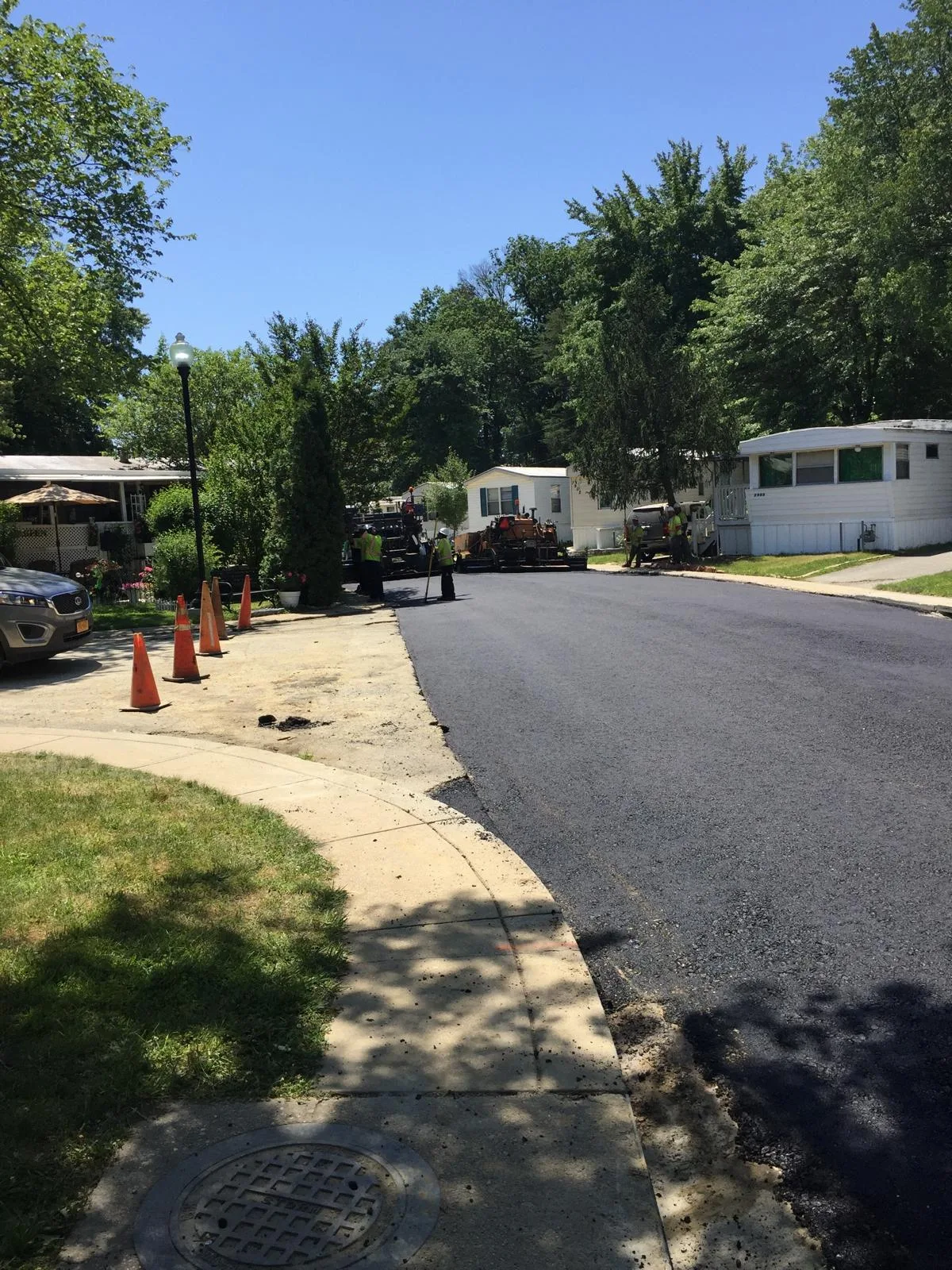
A short demonstration section — a community access road, a band office driveway, a heavy-haul stretch — is the most useful first step. We assess the soil, define the scope with your public works team, and demonstrate the result on your land, in your conditions. From there, your community owns the data and the decision.
A pilot also produces something equally valuable: a clean, locally-generated dataset that your engineers, your environmental consultant, or your COMEX or MELCCFP submission can cite. Soil characterization, performance, runoff data — measured on your land, owned by your community.
Conversations with SOLECOVIA can be held in English or in French, in person or remotely. Documentation can be shared in advance for technical review by your engineers or partners.