
Lifespan and maintenance
Freeze-thaw Resistance
Proven structural stability under real-world cold-climate conditions
The Challenge
Why freeze-thaw cycles destroy traditional roads
Freeze-thaw cycles are one of the primary causes of premature deterioration of traditional road infrastructure. Water infiltration into the structure, followed by expansion during freezing, leads to cracking, rutting, loss of bearing capacity, and repeated interventions.
LL-TECH technology was developed to address this structural issue. By transforming in-place materials into a dense, cohesive structure with very low permeability, it limits water migration within the pavement and sustainably stabilizes bearing capacity — even under saturated conditions and repeated thermal cycles.
No freeze-related structural degradation observed at evaluated sites after several full winters of operation.
Laboratory Validation
Performance tested per ASTM & AASHTO protocols
Very Low Permeability
Hydraulic conductivity measured at 3 to 6 × 10⁻⁹ cm/s on treated soil cores (ASTM D5084, S.A.M. Consultants 2017) — roughly an order of magnitude lower than the same untreated soil. Less water entering the structure means less to freeze.
Flexibility Retained
The bound layer keeps a measurable residual flexibility after curing, rather than going fully brittle like cement-stabilized layers. In the field this shows up as reduced surface cracking through repeated thermal cycles, though the underlying mechanism has not been characterized in third-party rheology tests.
Compressive Strength
Single-specimen test on a sand-clay mix: LL30 at 4% reached 1,625 PSI versus 804 PSI for Portland Cement at 8% on the same soil (ASTM C39, S.A.M. Consultants 2016). Strength is soil-dependent — design values come from project-specific testing.
Field Performance
Stability observed across multiple winters
The performance of LL-TECH has been observed at numerous sites exposed to recurrent winters, annual freeze-thaw cycles, and prolonged moisture in North America and Europe. Unlike traditional asphalt, no freeze-related structural degradation has been observed after several complete winters of operation.
The Mechanism
No infiltration. No ice. No heaving.
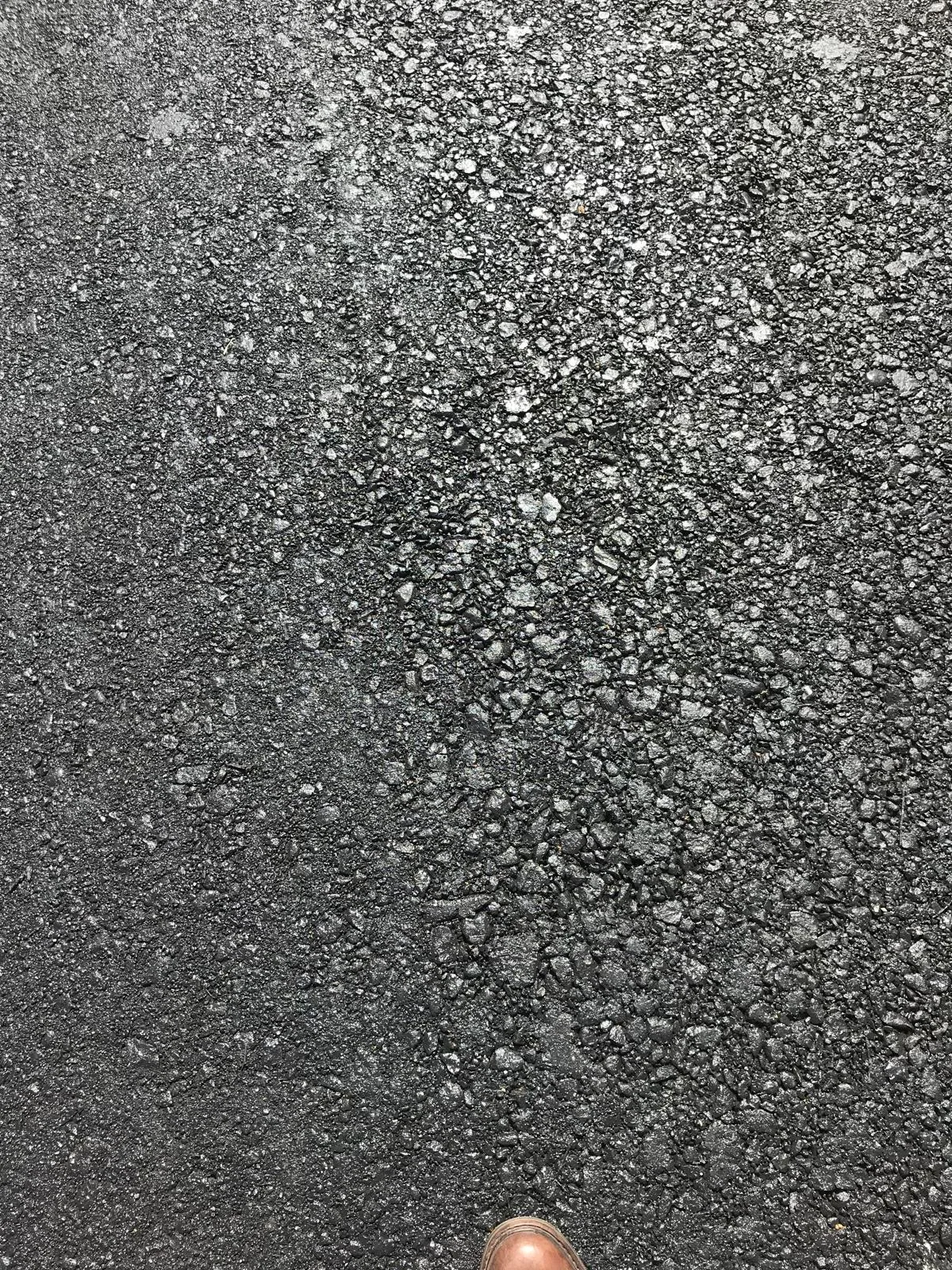
Traditional pavements fail in cold climates because water infiltrates the structure, freezes, expands, and breaks the material from within. LL-TECH addresses the root cause: lab tests measured a hydraulic conductivity of 3 to 6 × 10⁻⁹ cm/s on treated soil cores (ASTM D5084, S.A.M. Consultants 2017) — roughly one order of magnitude lower than the same soil untreated. Less water enters the structure, so less is available to freeze.
The bound layer also keeps a measurable residual flexibility after curing rather than going fully brittle, which limits surface cracking through repeated thermal cycles. The mechanism is observed in the field; it has not been characterized in third-party polymer-chemistry tests, so we describe it as observed behavior, not as a chemistry claim.
- Lower permeability slows water migration into the structure
- Less free water means less pore-pressure buildup and reduced potential for ice lens formation
- Residual flexibility limits brittle cracking under thermal expansion and contraction
- CBR maintained under soaking conditions (ASTM D1883) — strength retained in saturated scenarios
Sub-base erosion is virtually eliminated — LL-TECH is not a floating surface. It stabilizes the load-bearing layer itself.
Documented Case Studies
Real-world results in cold climates
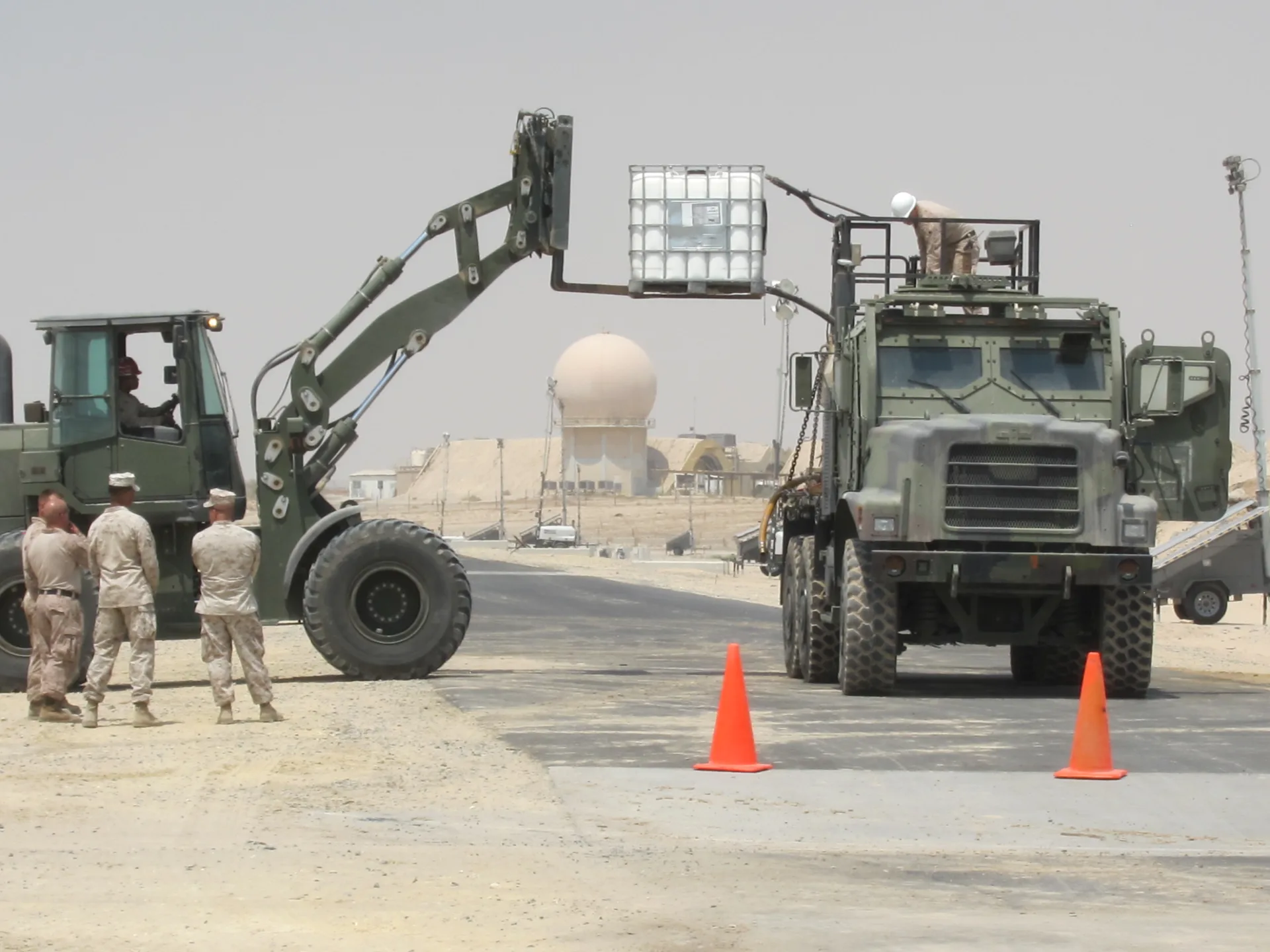
<strong>Context:</strong> Isolated mountainous site at 6,000–12,000 ft elevation. Annual temperatures from −29 °C in winter to +32 °C in summer. Limited logistical access. High U.S. federal regulatory requirements.
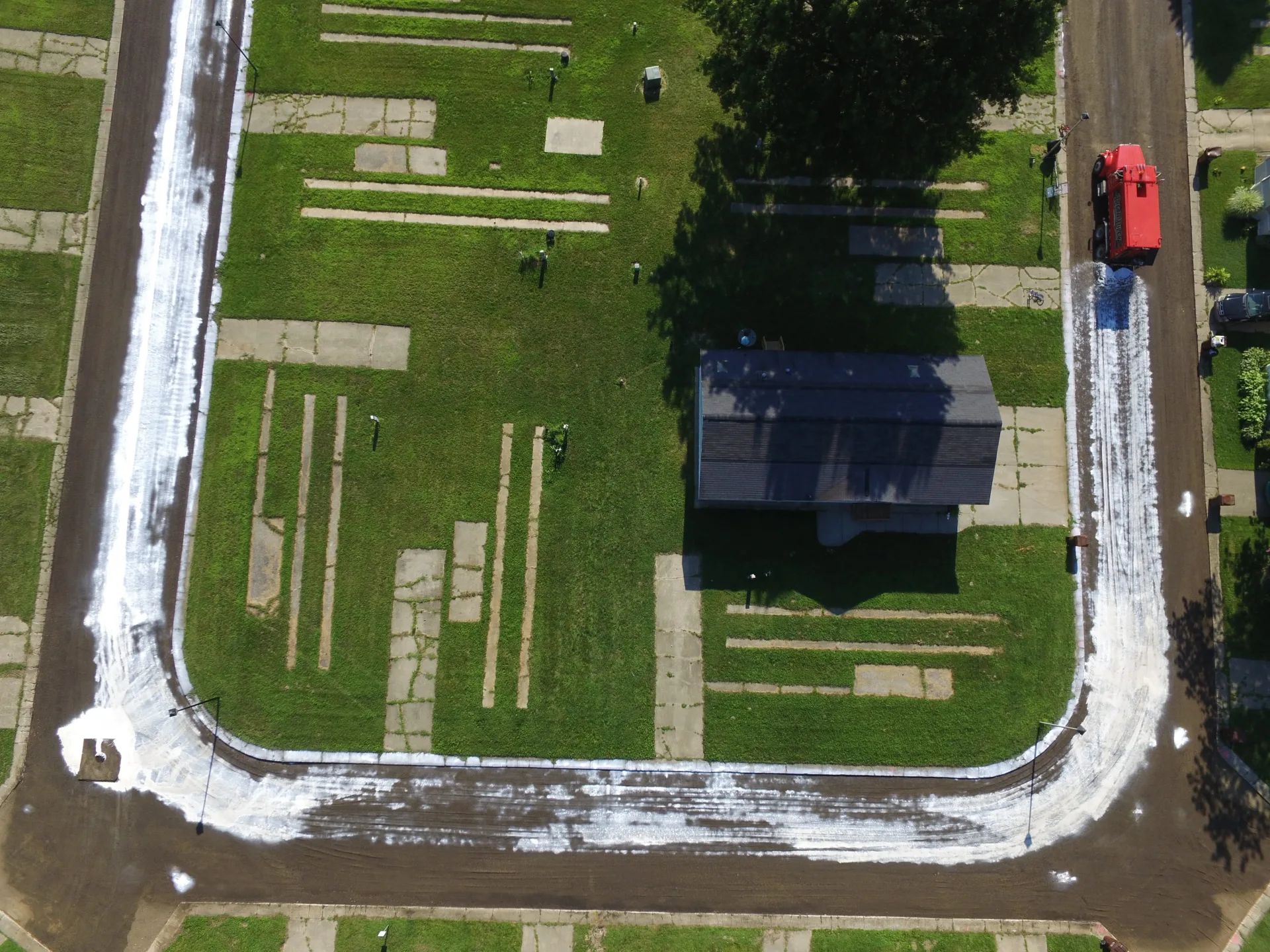
Cold in-place reclamation in July 2017 of ~27,000 SY of failing asphalt — 50% base course / 50% asphalt millings, mixed in to 4–5 inches with a 2-inch asphalt cap. Project remains in service through Michigan winters.
~35,000 SY of stabilized base for a heavy-haul road, October 2018. ¾-inch road base mixed in with the reclaimer, finished with an asphalt cap. In service across multiple Illinois winters.
~18,000 SY rehabilitated in August 2015 — asphalt millings + base course mixed in place. Asphalt cap thickness reduced versus a conventional remove-and-replace approach.
Sources: corpus FLD-2 (Landlock International Field Case Studies, 2012–2024) and FLD-7 (Mountain Warfare Training Center). Long-term distress surveys and freeze-day counts are not included in the public record; both can be requested through Solecovia for engineering reviews.
Build roads that outlast every winter
SOLECOVIA deploys LL-TECH to deliver pavement structures with proven resistance to freeze-thaw cycles — no annual repairs, no asphalt dependency.
Contact SOLECOVIA