
Why LL-TECH
Proven Technology
Independent lab testing and field deployments across multiple continents — documented in the Landlock case-study record (2012–2024)
The Track Record
Deployed globally. Tested rigorously.
LL-TECH is a polymer that binds the existing soil into a single hardened layer instead of sitting on top of it the way asphalt does. The product was developed and field-tested by Landlock starting in the early 2010s, and its lab and field reports are gathered in the Landlock corpus referenced throughout this site.
Lab tests on cured cores show strength gain through the first 28 days (ASTM C31/C42, S.A.M. Consultants 2023, specimens at 7, 14, 21, and 28 days). Field installations from 2012 onward remain in service; long-term distress and resurfacing data are available on request through Solecovia.
Testing Standards
Certified performance — ASTM and AASHTO validated
Compressive strength (ASTM C39): on a sand-clay specimen, LL30 at 4% dosage reached 1,625 PSI versus 804 PSI for Portland Cement at 8% dosage on the same soil (S.A.M. Consultants, 2016). Single-specimen test, soil-dependent.
Moisture-induced rutting (AASHTO T-324): on a lab-compacted LL30 specimen submerged in water at 25 °C, max rut depth was 1.78 mm after 20,000 passes (Behnke Materials Engineering, 2018). The test characterizes hot-weather rutting and moisture susceptibility — it does not characterize freeze-thaw behavior.
Reported values come from specific test conditions (often single-specimen) and do not automatically generalize to every soil or site. Project-specific testing is the basis for design.
Tested per ASTM Protocols
ASTM C39 (compressive strength) and ASTM D5084 (hydraulic conductivity) — independent reports by S.A.M. Consultants, 2016 and 2017. Reports available on request.
Tested per AASHTO Protocols
AASHTO T-324 Hamburg Wheel-Track moisture/rutting tests run in AASHTO-accredited labs (Behnke Materials Engineering, 2018). Mobile Model Load Simulator (MMLS) tests reported by Kamen Engineering, Australia, 2012.
CBR Testing
CBR / IPI bearing tests under ASTM D1883 and the equivalent French NF / EN protocols (LaboRoutes Grollemund report, 2019, on Brittany silty-sand B3 material) — values are soil-dependent and confirmed per project.
Aircraft Load Testing
Aircraft pass ratings on treated runways are documented per site and per aircraft (e.g. C-17 and C-130 at Mocoron, Honduras, 2015) using DCP-based PCASE analysis. Ratings are aircraft- and site-specific — not generalizable to all heavy traffic.
Case Studies
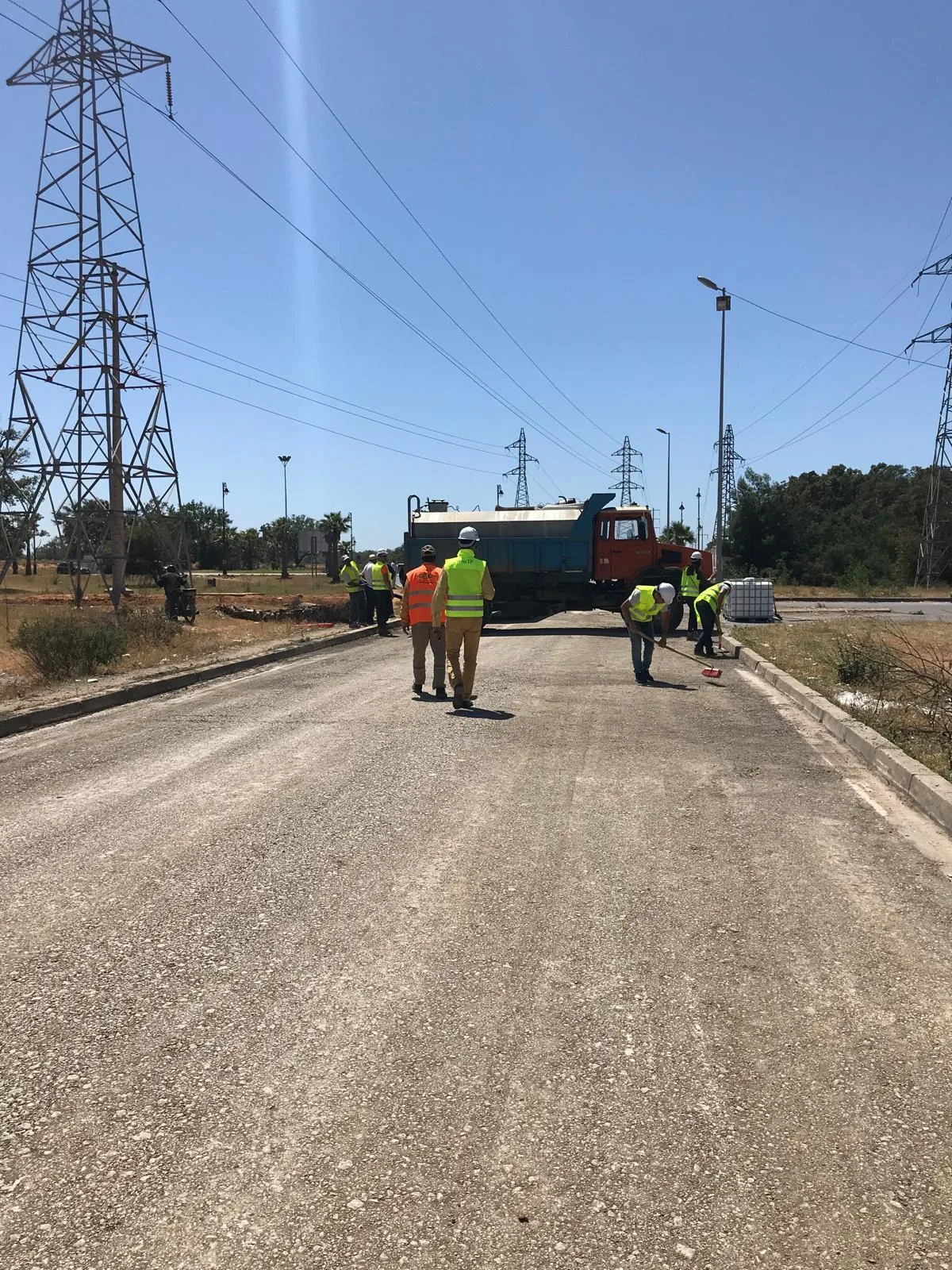
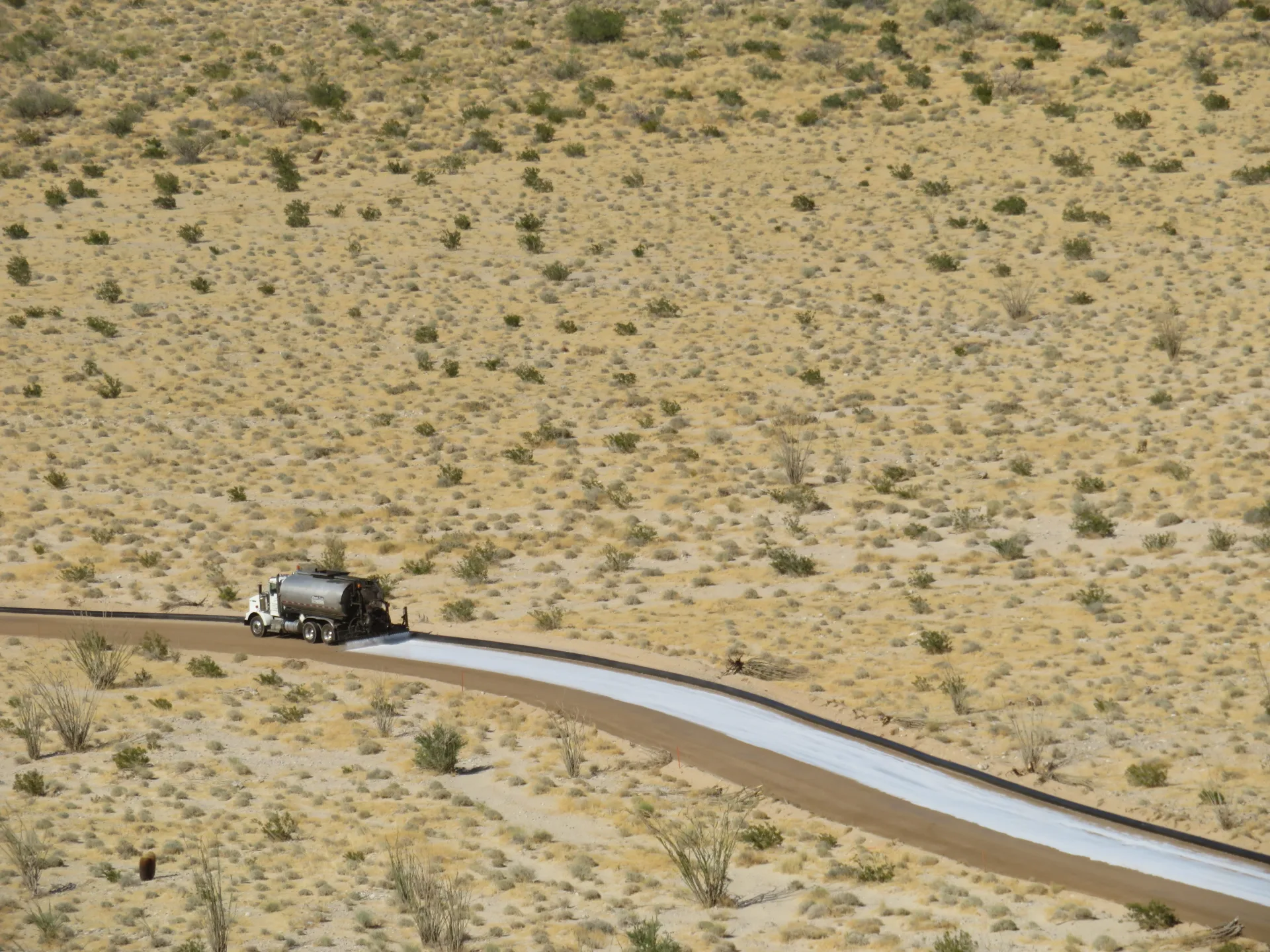
Documented case studies in the Landlock corpus (FLD-1 to FLD-7, 2012–2024) span temperate, alpine, desert, and tropical climates across multiple continents. Project list available on request.
U.S. Military Validated
Adopted by the U.S. Department of Defense (USAF, USMC) — one of the world's most rigorous compliance frameworks.
Institutional Approvals
Validated by the most demanding organizations in the world
Used by the TVA for road and environmental stabilization applications — one of North America’s most demanding public agencies.
Adoption by USAF and USMC for tactical airstrips, forward operating bases, deployment roads, and logistics platforms.
48-hour acute toxicity tests on simulated rainwater runoff from LL25-treated soil, run by Coastal Bioanalysts (NELAP/TNI accredited), 2013 — EPA Method 2000.0 (fathead minnow) and 2002.0 (Ceriodaphnia dubia). Survival of both species in LL25 runoff was statistically indistinguishable from controls; LC50 was greater than 100% effluent. The runoff caused no statistically significant acute toxicity.
Official certifications, independent testing, and international validations confirm mechanical performance, durability under severe conditions, environmental neutrality, and regulatory compliance.
With LL-TECH, SOLECOVIA is redefining performance standards
Request the full technical documentation package — testing reports, case studies, and deployment data for your specific application.
Request Technical Documentation